
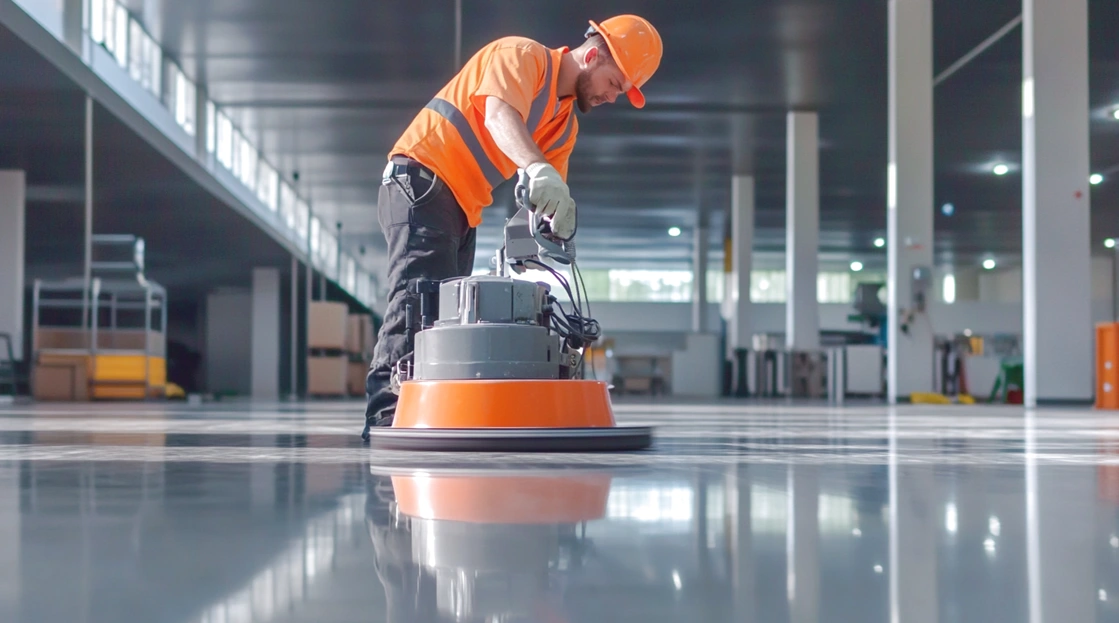
Floors take a beating every single day. Foot traffic, furniture, equipment, spills, dust, in fact, everything hits the floor first. If a floor cannot handle stress, it starts getting damaged. That failure costs money, time, and peace of mind. This is where concrete polishing changes the game.
Below, we will be discussing how concrete floor polishing in NJ improves floor durability. So, without any delays, let’s start.
What Concrete Polishing Really Does to a Floor
Concrete polishing does not just make a floor look shiny. The process transforms the surface structure of the concrete. Grinding tools remove weak laitance from the top layer. Each pass exposes stronger, denser material underneath.
After grinding, technicians apply a densifier. This chemical reacts with free lime inside the concrete. That reaction forms calcium silicate hydrate, which hardens the concrete from within. The surface becomes tighter, stronger, and more resistant to wear.
Polishing then smooths the surface to a refined finish. That smoothness reduces friction damage and prevents dust formation. At this point, the floor stops behaving like raw concrete and starts performing like a hardened surface built for abuse.
How Concrete Floor Polishing in NJ Improves The Durability of the Floor
Increased Surface Hardness Means Longer Life
Durability starts with hardness. Polished concrete delivers a harder surface than standard concrete floors. When the densifier penetrates the slab, it strengthens the capillaries inside the concrete matrix. This process increases abrasion resistance significantly.
Harder floors resist scratching from shoes, carts, and machinery. They also resist surface gouging caused by dragging heavy objects. Over time, this resistance translates into fewer repairs and no surface breakdown.
A harder floor also keeps its integrity under pressure. Industrial and commercial environments demand strength. Polished concrete meets that demand without needing coatings that peel or wear off.
Polished Concrete Resists Abrasion Better Than Raw Concrete
Abrasion kills floors slowly. Dust particles grind into surfaces with every step. Untreated concrete sheds fine particles over time, which creates more dust and accelerates wear.
Polishing eliminates this cycle. The grinding and densifying process locks particles in place. The surface stops shedding dust. With less loose material, abrasion drops dramatically.
This matters in warehouses, retail spaces, factories, and even homes. Less abrasion means the floor maintains its structure instead of eroding year after year.
Reduced Porosity Protects the Floor Structure
Concrete starts life as a porous material. Those pores allow moisture, oils, and chemicals to seep inside. Over time, that infiltration weakens the slab.
Polished concrete closes those pores. Grinding smooths the surface while densification tightens the internal structure. Liquids stay on top longer instead of soaking in instantly.
Reduced porosity protects against staining, freeze-thaw damage, and chemical deterioration. A protected slab holds its strength for decades rather than degrading from the inside out.
Impact Resistance Improves Through Polishing
Floors face impacts daily. Tools drop. Equipment falls. Objects crash during movement. Raw concrete absorbs those impacts poorly, which leads to chips and surface fractures.
Polished concrete handles impact better because of its densified surface. The hardened layer distributes force across a wider area. Instead of chipping, the surface absorbs and disperses the shock.
This improvement reduces surface spalling and edge damage. Over time, fewer chips mean fewer weak points that can expand into cracks.
Polished Floors Handle Heavy Traffic Without Breaking Down
High foot traffic destroys weak floors. The same applies to forklift routes and rolling loads. Concrete polishing prepares floors for that reality.
The smooth, hardened surface resists wear patterns. You do not see trails, dull spots, or surface thinning the way you do on untreated concrete. Polished concrete keeps a consistent finish even under constant use.
Traffic flows more smoothly on polished floors. That reduced friction cuts down micro-damage caused by repeated movement. Less micro-damage means longer structural life.
Crack Prevention Starts at the Surface
Concrete will crack. That fact will never change. What polishing does is slow the process and reduce surface stress that accelerates cracking.
Uneven, porous surfaces create stress concentrations. Polished surfaces distribute loads evenly. When the weight spreads out, the slab experiences less localized pressure.
Polished floors also stay cooler under friction. Lower surface heat reduces thermal stress. All of this works together to delay crack formation and limit crack expansion.
Also read: DIY vs Professional Concrete Floor Polishing: Which Is Right for You?
Polishing Eliminates Weak Coatings and Sealers
Many floors rely on topical coatings for protection. These coatings wear down, peel, and fail under pressure. Once they fail, the concrete underneath takes direct damage.
Polished concrete does not rely on coatings. The strength comes from the concrete itself. The densifier becomes part of the slab, not a layer sitting on top.
Without coatings, the floor avoids delamination issues. You do not deal with flaking, blistering, or reapplication cycles. The surface stays strong because nothing separates it from the slab.
Moisture Resistance Extends Floor Lifespan
Moisture destroys floors quietly. Water penetrates untreated concrete and weakens internal bonds. Over time, this leads to surface scaling and internal damage.
Polished concrete resists moisture intrusion better. The closed surface slows water absorption. While polished concrete does not create a waterproof barrier, it reduces moisture-related damage significantly.
In humid environments or areas with frequent cleaning, this resistance plays a huge role in durability. Floors maintain strength instead of degrading slowly from moisture exposure.
Chemical Resistance Protects the Surface
Many environments expose floors to chemicals. Cleaning agents, oils, fuels, and spills attack untreated concrete aggressively.
Polished concrete resists chemical penetration better due to its reduced porosity. Spills stay on the surface longer, which gives you time to clean them before damage occurs.
This resistance prevents chemical etching and surface weakening. Over time, chemical stability helps the floor maintain its structural performance.
Thermal Stability Improves Structural Performance
Temperature changes cause concrete to expand and contract. Weak surfaces respond poorly to this movement.
Polished concrete handles thermal shifts better because of its densified surface. The hardened structure tolerates movement without surface breakdown.
This stability reduces surface cracking and micro-fractures. Over time, the slab maintains better overall integrity.
Invest in Concrete Floor Polishing in NJ With PEC Floors Today
If you want floors that last longer and perform better, concrete floor polishing makes real sense. Polished concrete resists wear, handles heavy traffic, and stays strong without constant repairs.
At PEC Floors, we focus on durability, not quick fixes. Our concrete polishing services in New Jersey strengthen your floors from the inside while delivering a clean, modern finish. You get lower maintenance costs, better resistance to moisture and abrasion, and a surface built for long-term use. Invest once and enjoy reliable flooring that holds up day after day.
Contact us today and protect your concrete the smart way.
