
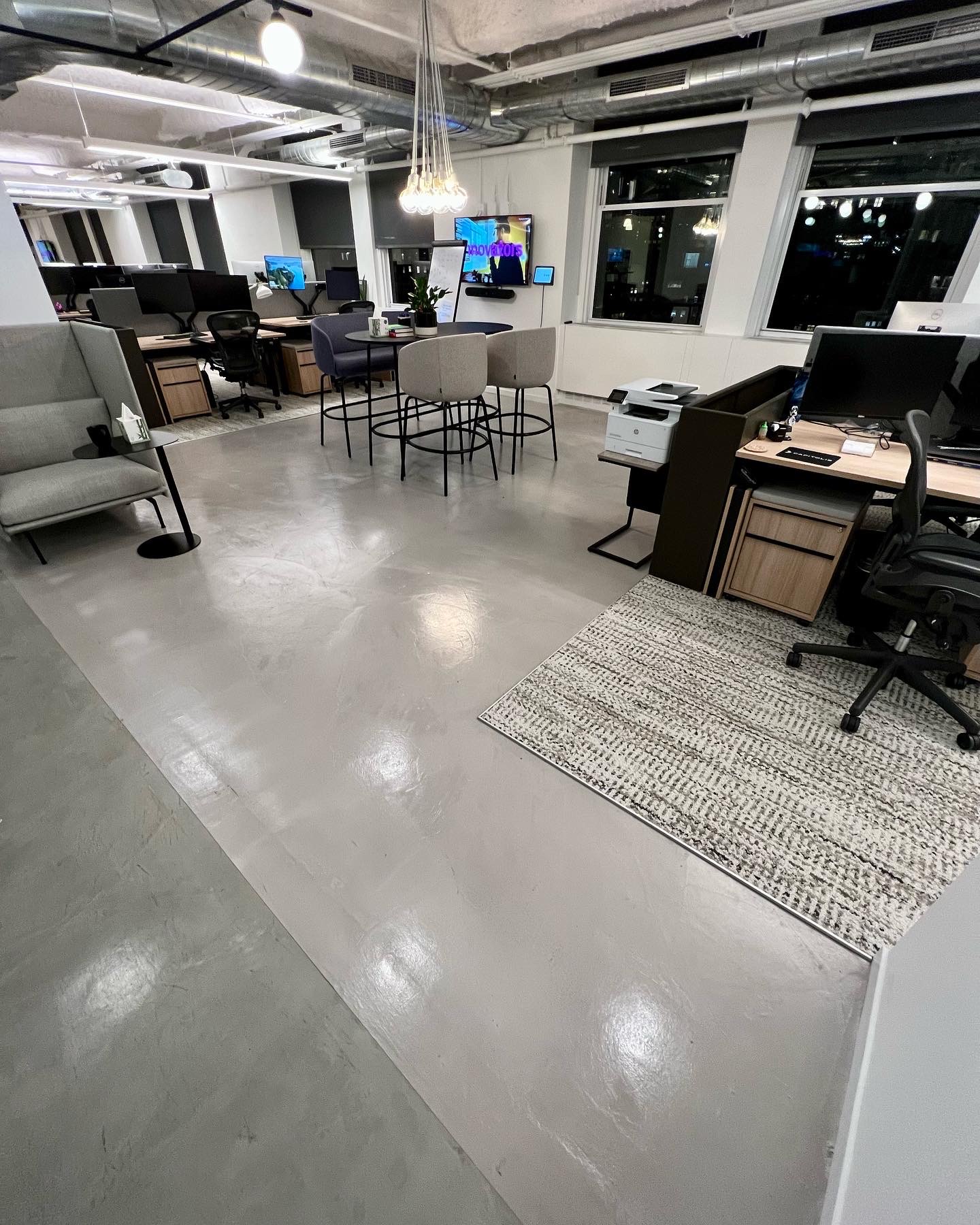
Stains, scratches, and outdated finishes can make your concrete floor look ready for replacement, even when the slab itself is still in good condition. Tearing out the floor means dealing with demolition, debris, and installing new concrete. If the damage is mainly on the surface, concrete micro-topping offers a practical way to change the floor’s appearance without removing the slab.
Custom colors and textures allow property owners to achieve finishes inspired by polished concrete or natural stone. Minor surface flaws become less noticeable beneath the renewed finish, giving old flooring a cleaner, more updated appearance. Suitability depends on the slab’s condition, since significant structural damage requires attention before resurfacing.
What Is Micro-Topping?
Micro-topping is a cement-based finishing material designed for application in very thin coats. Contractors spread the mixture across a prepared surface using specialized tools, controlling its thickness and final texture as they work. Since the coating adds little height, it helps maintain existing floor levels around doorways and adjoining surfaces. Product specifications determine the recommended application thickness, curing time, and compatible sealers, so installation methods vary by system.
6 Ways Micro-Topping Transforms Old Concrete Floors
The benefits of micro-topping extend beyond the floor’s finished appearance. Results depend on the chosen surface treatment, demands of the space, and care your floor receives after installation. Together, these factors shape six key advantages, covering visual improvements, everyday performance, and ongoing maintenance.
Conceals Stains, Discoloration, and Minor Imperfections
Spills, faded patches, and surface marks can leave older concrete looking uneven, even when the floor remains usable. With a fresh layer of micro-topping, many minor blemishes and variations in color become less noticeable beneath the renewed finish. Results depend on the condition of the existing concrete and the chosen finish, as deep stains or pronounced imperfections may remain visible without proper pretreatment.
Offers Custom Colors, Textures, and Decorative Finishes
Color, texture, and application techniques give micro-topping flexibility when updating an existing concrete floor. The right combination changes how the surface looks and how it fits the room’s overall design. Common options include:
- Solid colors: Pigmented finishes create a consistent tone, from soft neutrals to deeper shades that contrast with surrounding surfaces.
- Textured surfaces: Subtle variations add visual depth and create a different look from a smooth, uniform finish.
- Decorative effects: Depending on the product and application method, installers can create custom patterns or tonal variations that give the floor a more distinctive appearance.
Matching the selected finish to the room’s style helps make older concrete feel like an intentional part of the interior rather than simply an existing floor.
Replicates the Look of Polished Concrete and Natural Stone
Sleek, continuous surfaces give worn concrete a more refined appearance, similar to polished concrete. Microcement recreates this look with a smooth, refined finish. It suits contemporary kitchens, open-plan living areas, and commercial interiors with modern furnishings.
Stone-inspired finishes offer a different way to update old concrete, introducing visual variation reminiscent of limestone or slate. These finishes suit entryways, bathrooms, and interiors featuring natural materials, adding an organic character without installing actual stone flooring. The final effect depends on the selected product and application technique.
Renews Existing Concrete Without Full Floor Replacement
When the concrete slab remains suitable for resurfacing, concrete micro-topping provides an alternative to removing and rebuilding the floor. Contractors apply the new coating over the prepared slab, completing any necessary repairs before installation. Retaining the original concrete reduces the scope of work compared with full replacement, making resurfacing a practical option when the underlying structure remains sound.
Adds a Durable, Wear-Resistant Finish
Daily foot traffic, furniture movement, and repeated cleaning put wear on concrete floors, particularly in busy homes and commercial spaces. Micro-topping renews the exposed surface with a finishing layer designed for regular use. When paired with a compatible sealer, the system helps protect against everyday surface wear and makes routine cleaning easier. Several factors influence how well the finished floor holds up:
- Product formulation: Different resurfacing systems have varying performance characteristics, so the selected product should suit the expected traffic and use.
- Protective sealer: Compatible sealers help shield the finish from everyday wear, staining, and moisture, depending on the product.
- Application and curing: Following manufacturer specifications supports proper bonding and allows the material to develop its intended properties.
- Routine maintenance: Suitable cleaning products and periodic sealer maintenance help preserve the surface over time.
Simplifies Routine Floor Cleaning and Maintenance
Micro-topping gives old concrete floors a smoother, more consistent finish that is easier to maintain than a heavily worn or uneven surface. Once sealed, the renewed floor is less likely to absorb everyday spills, depending on the sealer used. Dust, loose dirt, and routine marks are easier to remove with regular sweeping and damp mopping, while occasional sealer maintenance helps preserve the finish.
| Floor feature | Benefit for routine care |
| Consistent finished surface | Makes everyday dirt and dust easier to remove |
| Compatible protective sealer | Helps limit staining and liquid penetration |
| Smooth finish | Reduces places where dirt can collect |
| Maintained sealer | Preserves the surface’s protective properties |
Which Old Concrete Floors Are Suitable for Micro-Topping?
Age alone does not determine whether an old concrete floor is suitable for micro-topping. Floors with faded color, stains, and minor surface imperfections are often good candidates, provided the underlying slab remains stable and sound.
| Floor condition | Suitability for micro-topping |
| Faded color and surface stains | Usually suitable if the concrete is sound. |
| Minor surface irregularities | Suitable after appropriate preparation |
| Small cracks | May be suitable after assessment and compatible repairs |
| Flaking or crumbling concrete | Loose, weakened areas require repair first |
| Paint, sealer, or coating on the concrete | Requires checking and appropriate surface preparation |
Concrete floors with major structural problems or ongoing movement require further assessment before micro-topping. Before resurfacing, installers should also assess moisture conditions because excessive moisture in concrete slabs can contribute to debonding and deterioration of flooring systems and coatings.
How the Micro-Topping Application Process Works
Refreshing an old concrete floor with micro-topping involves more than spreading a thin coating over the existing slab. Each stage affects how well the material bonds, how evenly it covers the surface, and how the finished floor looks.
Assessing the Existing Floor
Before work begins, contractors inspect the concrete for cracks, loose areas, uneven patches, existing coatings, and signs of moisture. These conditions help determine whether the slab is suitable for resurfacing and which repairs are necessary before application. Checking the floor also allows installers to select a compatible micro-topping system.
Preparing the Surface for Bonding
Proper surface preparation helps concrete micro-topping bond securely to old concrete. Contractors typically:
- Remove dirt, grease, loose concrete, and other contaminants
- Grind or mechanically prepare the surface as required by the selected product
- Repair cracks and damaged areas where appropriate
- Clean the floor thoroughly and apply a compatible primer or bonding agent if specified
Applying and Finishing the Overlay
Installers spread the micro-topping in thin, even coats using techniques suited to the desired finish. Each layer cures according to the manufacturer’s instructions before the next step. Once the overlay is ready, a compatible sealer is applied if required to protect the surface and simplify maintenance.
Maintaining Micro-Topped Concrete After Installation
Proper aftercare helps preserve the appearance of micro-topped concrete and protects the finished surface from premature wear. Cleaning methods, foot traffic, and moisture exposure all affect how the floor holds up over time. To maintain your micro-topped concrete floor:
- Follow the recommended curing period before allowing foot traffic, moving furniture, or cleaning the surface
- Sweep regularly and damp-mop with a compatible, non-abrasive cleaner
- Avoid harsh chemicals, abrasive tools, and excessive water that could damage the finish or sealer
- Place protective pads beneath furniture legs to reduce scratches and scuff marks
- Inspect the surface periodically for cracks, peeling, or signs of sealer wear
- Reapply a compatible sealer when recommended by the manufacturer or when the existing protective layer requires renewal
Refresh Your Old Concrete Floors With PEC Floors
Old concrete floors do not always require complete replacement to achieve a fresh, updated appearance. Concrete micro-topping renews suitable existing slabs with a new finish while offering flexibility in color, texture, and design. Choosing the right system and ensuring proper preparation are essential for achieving a result that suits your space.
PEC Floors helps property owners transform worn concrete surfaces with micro-topping solutions tailored to their flooring goals. We focus on proper surface assessment, careful preparation, and precise application to achieve a clean, consistent finish. Contact PEC Floors today to refresh your old concrete floors with our micro-topping services.
Frequently Asked Questions
How long does micro-topping last on concrete floors?
Micro-topping longevity depends on product quality, surface preparation, installation, foot traffic, and maintenance. Properly installed and maintained systems can last for years, but no specific lifespan applies to every floor.
Can micro-topping be applied over old, cracked concrete?
Yes, minor cracks may be repairable before application, depending on the product and the condition of the slab. Cracks caused by ongoing movement or structural problems require further assessment because they may reappear through the new finish.
Is micro-topping cheaper than replacing a concrete floor?
Yes, micro-topping is generally cheaper than full concrete floor replacement because it avoids most demolition, debris removal, and new concrete installation costs. Retaining the existing slab reduces labor and material expenses while giving the floor a refreshed appearance.
Can I install micro-topping myself?
DIY installation is possible with certain products, but achieving consistent thickness, color, texture, and adhesion requires proper preparation and application technique. Mistakes during mixing, layering, or curing can affect the final appearance, so professional installation is worth considering for prominent floors.
Does micro-topping require a primer?
Some systems require a specific primer or bonding agent, while others follow different preparation procedures. The correct approach depends on the selected product and the condition of the existing concrete, so follow the manufacturer’s installation specifications.
What colors and finishes are available for micro-topping?
Options vary by product and application technique, with choices that include neutral shades, darker colors, subtle texture, and decorative tonal variations. Reviewing samples or test panels helps you understand how the finish will look under your room’s lighting.
