
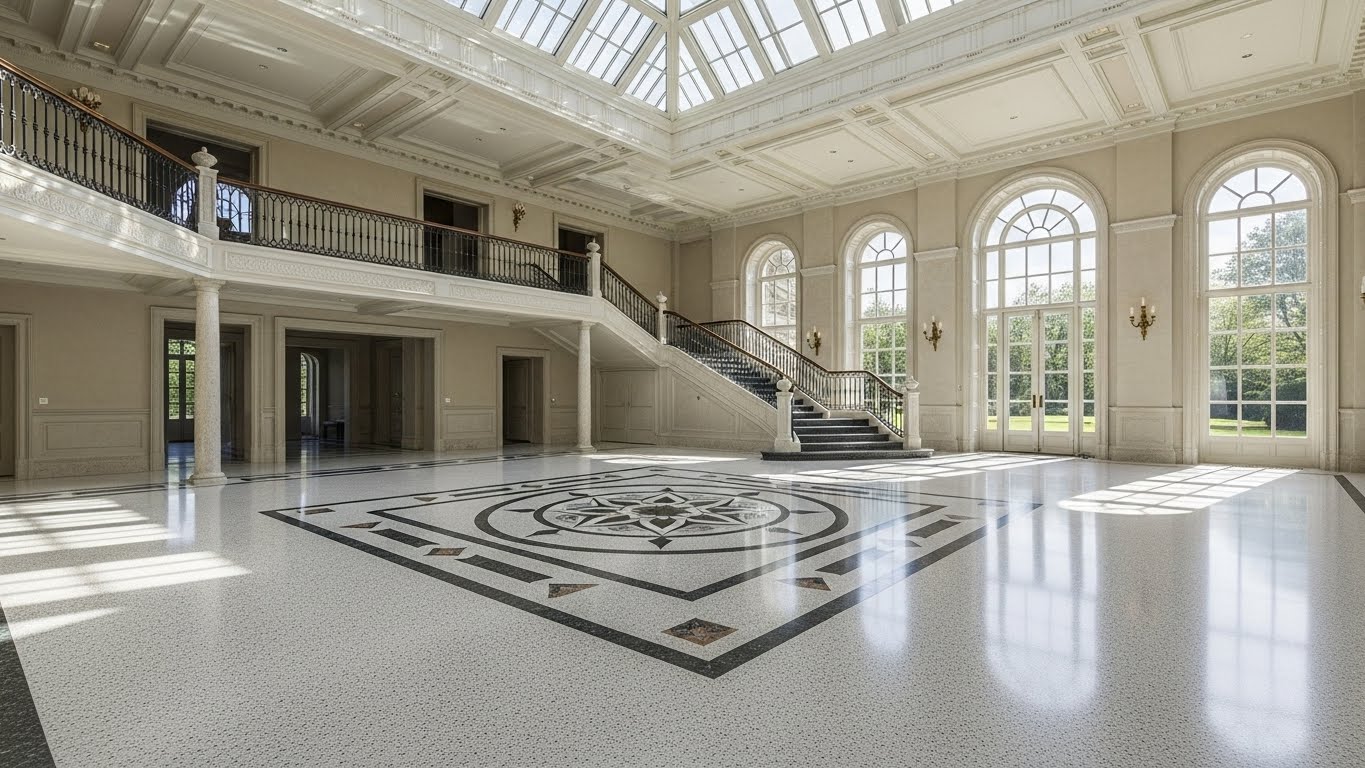
Choosing a flooring material is a long-term investment that affects how your space looks, performs, and holds up for years to come. Whether you are renovating a lobby, a restaurant, or a home, the debate often comes down to terrazzo floors vs. traditional flooring options. With so many materials on the market, knowing what actually sets terrazzo apart will help you make a confident decision.
Among all flooring choices, terrazzo floors continue to stand out for their durability, design flexibility, and timeless appeal. But how exactly does terrazzo differ from the flooring used traditionally, like hardwood, tile, or carpet? Let’s break it down in a clear, practical way so you can decide what works best for your space.
What Makes Terrazzo Flooring Different?
Terrazzo is a composite material made by embedding chips of marble, glass, granite, or quartz into a binder, either cement-based or epoxy-based. Then it is ground, and the surface is polished to a smooth, seamless finish. Unlike traditional flooring materials, terrazzo is poured and cured directly on site, which means every floor has its own unique pattern.
Once installed and polished, there are no planks to warp, no grout lines to stain, and no seams for moisture or debris to collect in. Its ability to handle high foot traffic while still looking refined gives it a clear edge over many conventional flooring types.
Terrazzo vs. Traditional Flooring: Quick Comparison
| Feature | Terrazzo Flooring | Hardwood Flooring | Ceramic / Porcelain Tile | Carpet |
| Lifespan | 40 to 50+ Years | 20 to 30 Years | 10 to 20 Years | 5 to 10 Years |
| Seams / Joints | Completely Seamless | Planks with Seams | Open Grout Lines | Seams / Fibers |
| Moisture Resistance | 100% Waterproof | High Risk of Warping | Waterproof (but Grout Absorbs) | Traps Moisture & Mold |
| Maintenance | Dust Mop & Water | Sanding & Refinishing | Grout Scrubbing & Sealing | Deep Steam Cleaning |
| Upfront Cost | High | Medium to High | Low to Medium | Low |
Read More: Epoxy Flooring vs. Other Floor Coatings: Which Is Better?
Terrazzo vs. Hardwood Flooring
Hardwood is prized for its warmth and classic appeal, but it comes with real limitations. Wood is sensitive to moisture, prone to scratching, and requires refinishing every few years to maintain its appearance. In high-traffic commercial settings, hardwood often shows wear far sooner than expected.
Terrazzo, by comparison, offers:
- Far greater resistance to scratches and dents
- No vulnerability to water damage or warping
- A surface that does not need refinishing for decades
If the floor needs to perform under constant use, terrazzo is the more dependable option.
Terrazzo vs. Tile Flooring
Tile is a popular choice because of its affordability and wide range of styles. However, tile floors rely on grout lines, and grout is where most maintenance headaches begin. Grout stains, cracks, and collects bacteria over time, and replacing damaged tiles rarely matches the surrounding floor perfectly.
For spaces that demand both hygiene and a polished appearance, terrazzo clearly outperforms tile. Because it is poured as a single seamless surface, there is:
- No grout to clean, stain, or replace
- No risk of individual tiles cracking or chipping loose
- A continuous, monolithic look that scales across large spaces
Terrazzo vs. Carpet
Carpet is often chosen for comfort and sound dampening, but it traps dust, allergens, and moisture, and it wears down quickly in commercial environments. Stains are often permanent, and replacement is required far more frequently than most owners expect.
If indoor air quality and long-term cleanliness are priorities, terrazzo is the clear winner. Terrazzo flooring offers:
- A non-porous surface that resists stains and bacteria
- No fibers to trap allergens or odors
- A lifespan measured in decades rather than years
Which Flooring Is Easier to Maintain?
Traditional flooring materials often develop cracks, stains, or worn patches that require regular repair or replacement. Over time, this adds up in both cost and disruption. One of terrazzo’s biggest advantages is how little upkeep it actually requires. The dense, polished surface prevents dirt, moisture, and bacteria from penetrating the floor.
For businesses and homeowners who value cleanliness and efficiency, terrazzo flooring is the more practical long-term choice. Cleaning terrazzo typically involves:
- Simple sweeping or dust mopping
- Occasional damp mopping
- No harsh chemicals or specialized treatments
The Cost Advantage of Terrazzo Over Time
While exact pricing depends on your design complexity and material choices, epoxy terrazzo generally requires a higher initial investment compared to standard tile or hardwood. However, because it lasts for generations without needing replacement, the cost per square foot over its lifecycle is significantly lower than almost any traditional material on the market.
Terrazzo offers:
- A lifespan that often exceeds 40 to 50 years
- Minimal repair and replacement costs
- Reduced disruption from maintenance or renovation
Design Options and Customization
Traditional flooring materials offer far more limited customization and tend to fade, stain, or go out of style over time. Terrazzo retains its appearance for generations, making it a favorite for lobbies, showrooms, and architecturally significant spaces.
Terrazzo offers a wide range of design options, including:
- Custom color blends and chip combinations
- Logo and pattern inlays for commercial spaces
- Polished, honed, or textured finishes
- Seamless transitions across large floor areas
Sustainability Benefits of Terrazzo Flooring
Modern terrazzo systems often incorporate recycled glass, marble, and other reclaimed materials, making them a more sustainable choice than many manufactured flooring products. Because terrazzo lasts so long, it also reduces the environmental impact tied to frequent replacement, something hardwood, carpet, and even tile cannot match over an equivalent lifespan.
Balancing the Decision: Pros and Cons of Terrazzo
To make an informed investment, it is important to look at both sides of the material.
The Advantages
- Unmatched Lifespan: Often outlasts the building itself.
- Low Maintenance: Requires only simple sweeping and damp mopping; no harsh chemicals needed.
- Design Freedom: Allows for custom color blending, intricate patterns, and commercial logo inlays.
- Eco-Friendly: Incorporates recycled glass and reclaimed marble chips, contributing to LEED certification points.
The Considerations
- High Initial Cost: Requires a larger upfront financial investment than traditional materials.
- Specialized Installation: Must be installed by certified professionals; it is not a DIY project.
- Surface Temperature: Like stone or tile, it can feel cold underfoot unless paired with underfloor radiant heating.
Upgrade Your Space With Terrazzo Flooring
Terrazzo is the premier choice if you need maximum durability, low maintenance, and a custom design that adds lasting value to your property. Contact PEC Floors to install your terrazzo flooring. Whether you are upgrading a commercial showroom or a residential interior, our trained and certified floor specialists will deliver a flawless, permanent finish.
Call us now to book your consultation and request a quote.
Frequently Asked Questions
Is terrazzo flooring slippery?
Like polished marble or porcelain tile, highly polished terrazzo can be slippery when wet. However, during the sealing process, specialists apply non-slip or anti-slip additives to the sealer to increase traction and ensure safety in high-traffic or moisture-prone areas.
Can terrazzo floors be repaired if damaged?
Yes. If terrazzo chips or cracks due to building settling or a heavy impact, it can be patched. Certified professionals mix a matching binder color with identical aggregate chips, fill the damaged area, and re-polish it to blend seamlessly with the surrounding floor.
Is terrazzo flooring suitable for homes, or is it just for commercial spaces?
While highly popular in commercial lobbies and schools due to its durability, terrazzo is an excellent choice for modern residential spaces. It is frequently installed in residential entryways, kitchens, and bathrooms because of its seamless look, hypoallergenic properties, and compatibility with radiant underfloor heating.
Does terrazzo flooring scratch easily?
No. Terrazzo is exceptionally hard and scratch-resistant. Because it is composed of stone aggregates like marble, quartz, and granite bonded with dense epoxy or cement, it resists scratches from pet nails, high heels, and heavy furniture much better than hardwood or vinyl.
How long does it take to install terrazzo flooring?
Because terrazzo is poured, cured, ground, and polished on-site, the installation process typically takes 5 to 7 days, depending on the size of the space and the complexity of the design. Epoxy terrazzo generally cures faster than cementitious systems, allowing for a quicker turnaround.
